

Researchers from the University of Turin also found that an NEFH variant showed a protective association with ALS.
Researchers from the University of Turin also found that an NEFH variant showed a protective association with ALS.

December 30, 2020 - Bristol Myers Squibb has withdrawn nivolumab from the US market for the treatment of patients with small cell lung cancer who have experienced disease progression after a platinum-based chemotherapy and at least 1 other line of therapy.
Gene-editing therapy in sickle cell disease and advances in multiple myeloma dominated hematology news in 2020.
Readers favored news about ibrutinib, the first chimeric antigen receptor (CAR) T-cell therapy in mantle cell lymphoma, and the effect of the pandemic on patients with chronic lymphocytic leukemia.

In a new review, researchers outline both the underlying pathological mechanisms and potential therapeutic targets in pulmonary arterial hypertension (PAH).
December 21, 2020 - A rolling submission of the biologics license application for the BCMA-directed CAR T-cell product ciltacabtagene autoleucel for use in adults with relapsed/refractory multiple myeloma has been initiated to the FDA.

Results presented earlier this month at ASH showed a 97% overall response rate, and progression-free survival had not been reached.

Full approval has been granted by the FDA to osimertinib (Tagrisso) for use as adjuvant therapy following tumor resection among patients with non–small cell lung cancer whose tumors have EGFR exon 19 deletions or exon 21 L858R mutations.

December 18, 2020 - Sequential immunotherapy with rituximab-based therapy and the addition of lenalidomide proved effective among patients with TP53 wild-type mantle cell lymphoma, even among those with a Ki-67 level of at least 30% and/or blastoid morphology.
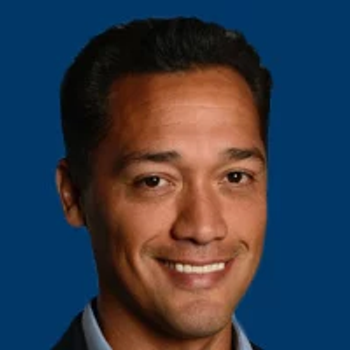
Javier L. Munoz, MD, discusses the nuances of choosing treatment options for patients with CLL in the frontline and relapsed/refractory settings, as well as novel therapeutic strategies on the horizon.

Results of the phase 2 study support continued dose escalation of SRP-5051 and further clinical development.
December 17, 2020 — The European Commission has granted a conditional marketing authorization to the CD19-targeted CAR T-cell therapy KTE-X19 for use in adult patients with relapsed or refractory mantle cell lymphoma who had previously received 2 or more lines of systemic therapy including a BTK inhibitor.

With several clinical trials underway, ocular therapy is seen as having potential in the treatment of a number of gene-related diseases.

These data follow a recent announcement from Sio Gene Therapies that the first patient in the high-dose cohort has been dosed.
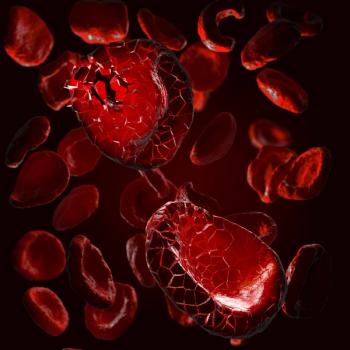
A new meta-analysis finds high rates of efficacy and high rates of toxicity in multiple myeloma patients treated with B-cell maturation agent (BCMA)-targeted chimeric antigen receptor (CAR)- T cells.
Checkpoint inhibitors have failed to improve progression-free survival and overall survival as second-line therapy and maintenance therapy in small cell lung cancer, but this class of agents continue to show encouraging activity worthy of a paradigm shift up front.
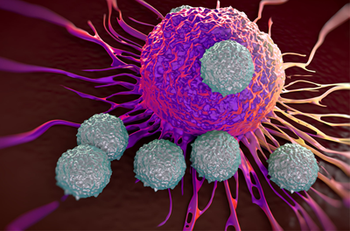
The findings help explain why costly CAR T-cell therapy does not work for some patients.
The UCSF hematologist discusses the growing portfolio for the sickle cell therapy after ASH 2020.

The historic phase 3 HOPE-B trial shows all but 1 treated patient discontinued prophylaxis after a single dose of etranacogene deaparvovec.

The second process of ARU-1801 in a new patient resulted in up to 4 times greater engraftment of transduced hematopoietic stem cells and progenitors at 6 months.

Research presented at the 2020 ASH Annual Meeting may have found an alternative path forward for patients who do not respond to immunotherapy treatment for large B-cell lymphomas.
What started out as a journey to better understand regulatory T cells has now led to an intriguing approach with an investigational cell therapy designed to prevent the risk of graft-versus-host disease and to improve relapse-free survival rates in patients undergoing hematopoietic stem cell transplantation.
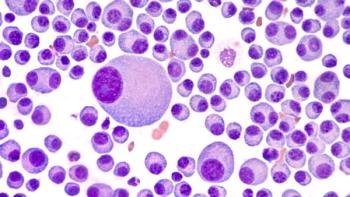
An off-the-shelf CAR T-cell therapy that targets B-cell maturation antigen, ALLO-715, elicited responses in heavily pretreated patients with relapsed/refractory multiple myeloma in early findings from a first-in-human study presented at the 2020 ASH Meeting.

Treatment with the BCMA-targeted CAR T-cell therapy idecabtagene vicleucel was found to yield clinically meaningful improvements in the quality-of-life of triple-class exposed patients with relapsed/refractory multiple myeloma.
December 6, 2020 - Odronextamab, is a novel CD20xCD3 bispecific antibody, continues to show intriguing antitumor activity and an acceptable safety profile in patients with relapsed/refractory B-cell non-Hodgkin lymphoma, including those who have previously received chimeric antigen receptor T-cell therapy.
The CAR T-cell therapy axicabtagene ciloleucel demonstrated long-term disease control with rapid responses and robust CAR T-cell expansion among patients with refractory large B-cell lymphoma.
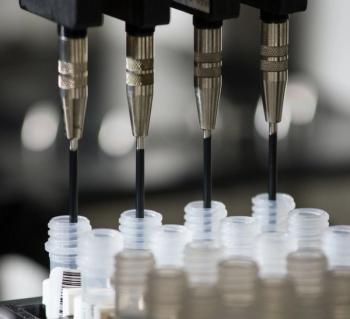
The furthest-progressed gene-edited therapy for a genetic disease reported historic efficacy data in ongoing phase 1/2 trials.

The CAR T-cell therapy elicited a 92% ORR, with high rates of durable responses in patients with indolent non-Hodgkin lymphoma.

The enriched chimeric antigen receptor T-cell therapy improved responses and prolonged duration of response in patients with relapsed/refractory multiple myeloma.
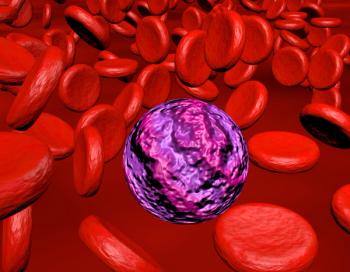
A novel CD20xCD3 bispecific antibody, odronextamab, continues to show intriguing antitumor activity and an acceptable safety profile in patients with relapsed/refractory B-cell non-Hodgkin lymphoma, including those who have previously received chimeric antigen receptor T-cell therapy.