
The co-founder, president, and chief executive officer of Solid Biosciences, whose own son has DMD, discussed promising updates from their phase 1/2 IGNITE-DMD trial.
The co-founder, president, and chief executive officer of Solid Biosciences, whose own son has DMD, discussed promising updates from their phase 1/2 IGNITE-DMD trial.
A new platform that will measure and track immune response to COVID-19 vaccines has recently launched, with implications for long-term healthcare decisions.
Eunice Wang, MD, and Bijal Shah, MD, MS, discuss the overall study design and patient population of the ZUMA-3 trial of CAR T-cell therapy in adult patients with R/R ALL.
The physician at the Dana-Farber Cancer Institute and instructor in medicine at Harvard Medical School discussed future directions that ide-cel research may take.
Eunice Wang, MD, and Bijal Shah, MD, MS, discussed the use of MRD status to assess therapeutic response and guide treatment decisions in patients with relapsed/refractory ALL.
Eunice Wang, MD and Bijal Shah, MD, MS, discuss novel agents and emerging therapeutic approaches for the treatment of acute lymphoblastic leukemia.
The director of Clinical Research in Hematologic Malignancies at Levine Cancer Institute discussed overall response rate and stringent complete responses in the CARTITUDE-1 trial.
The director of Mayo Clinic's Lymphoma Program discussed R/R FL and current treatment options.
The director of the Mario Lemieux Center for Blood Cancers at UPMC Hillman Cancer Center discussed how the meeting sets the foundation for what’s to come in the treatment of multiple myeloma and other hematologic malignancies.
The chief executive officer of FlowMetric discussed the company’s role in supporting the development of novel gene and cell therapies.

The director of the Mario Lemieux Center for Blood Cancers at UPMC Hillman Cancer Center discussed the phase 2 CARTITUDE-2 trial.
The head of neuroscience at Sangamo Therapeutics discussed advances in understanding disease biology that allow for more specific gene targeting.
The professor of medicine and director of the Hematopoietic Stem Cell Transplantation Program at University of Chicago Medicine described the impact of CAR T-cell therapy on the hematologic cancer landscape.
The head of neuroscience at Sangamo Therapeutics discussed the potential of ZFPs in central nervous system disorders.
Bradley Monk, MD, FACOG, FACS, discusses the mechanism of VB-111 in patients with ovarian cancer.
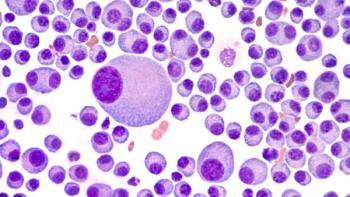
The recommendation comes after positive data was released from the recent phase 2 KarMMa trial.
Philippe Moreau, MD, discussed the CARTITUDE-1 trial's promising results with ciltacabtagene autoleucel read out at the 2021 ASCO Annual Meeting.
The director of Clinical Research in Hematologic Malignancies at Levine Cancer Institute discussed adverse events in the CARTITUDE-1 trial.
The head of global research and executive vice president of Atara Biotherapeutics discussed the development of ATA188.
Flexion Therapeutics believes that local administration of a gene therapy may not only improve pain management but potentially slow disease progression.
The chief executive officer of Gamida Cell discussed the company's novel approach to cell proliferation.
LogicBio's Mariana Nacht, PhD, shares details of the company's novel capsid discovery platform and gene editing technology.
Cynata Therapeutics' Ross Macdonald, PhD, discusses the company's pipeline and clinical-phase trials.

The director of the Mario Lemieux Center for Blood Cancers at UPMC Hillman Cancer Center discussed findings from the CARTITUDE studies.
The chief scientific officer and chief medical officer at Eyevensys discuss the biotech company's pipeline and approach to gene therapy.
The chief medical officer of Eyevensys discussed the company’s work in developing sustained drug delivery systems.
An expert in hematology/oncology discusses the emerging role of gene therapy to treat sickle cell disease.
The phase 2 ZUMA-3 trial of brexucabtagene autoleucel showed that it is possible to intervene early to prevent some toxicity, said Bijal Shah, MD, associate member in the Department of Malignant Hematology at Moffitt Cancer Center.
The therapy utilizes LogicBio’s GeneRide technology to insert a corrective copy of the target gene via synthetic AAV vectors.
Larry D. Anderson Jr, MD, PhD, associate professor, Harold C. Simmons Comprehensive Cancer Center, discusses updated findings of the phase II KarMMa trial assessing ide-cel chimeric antigen receptor (CAR) T-cell therapy for treatment of adult patients with relapsed or refractory multiple myeloma after 4 or more prior lines of therapy.